RSR is Up 56%: What does RSR Do?
By Matthew
Reserve Rights has suddenly become one of the hottest tokens in crypto.
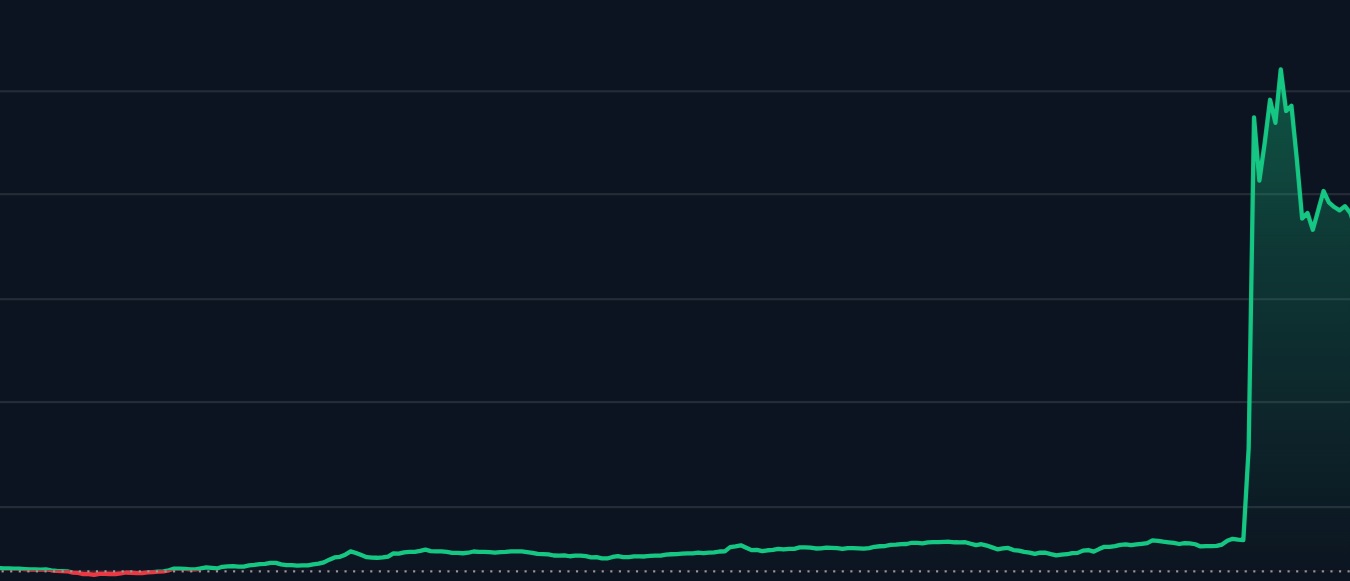
RSR is trading at $0.0024231, up 56.31% in 24 hours and 43.73% over the week. At its peak, the move was closer to 74% before the token began to consolidate. Bitcoin, by comparison, is up just 1.04% today at $83,866 and remains 2.29% lower over seven days.
The obvious catalyst is Upbit - the massive South Korea exchange added RSR/KRW and RSR/USDT trading on October 12, giving Korean investors a route to the token using won rather than having to move through another asset or exchange first. The timing makes the listing the most convincing explanation for the sudden burst of demand.
But an exchange listing explains why RSR moved today - it does not explain why anybody might want to own it. That story is increasingly about Reserve’s DTFs - Decentralized Token Folios - and an idea that looks familiar to TradFi once the crypto terminology is stripped away.
If Vanguard-style index investing looked like a very good idea in 1993, Reserve has made the crypto equivalent in 2026.
Reserve Is Building On-Chain Portfolios
A DTF is essentially a portfolio wrapped into a single token. It means that instead of buying 20 different cryptocurrencies, monitoring their weights and periodically rebalancing them yourself, a Reserve Index DTF can hold the basket and handle the rebalancing on-chain.
So users can mint or redeem the DTF directly against the underlying assets at net asset value, while the basket can contain anything from a handful to hundreds of ERC-20 tokens.
Reserve’s CoinMarketCap 20 DTF, for example, bundles major crypto assets into one portfolio. But the more interesting development in 2026 has been what happens when tokenized real-world assets are added.
Reserve now offers DTFs built from tokenized U.S. stocks. Its AI Infrastructure basket, for instance, includes tokenized Nvidia, TSMC, AMD, Broadcom, ASML, Intel, IBM and other companies exposed to the AI buildout. The underlying tokens are issued through Ondo Global Markets and represent shares held in regulated U.S. brokerage accounts.
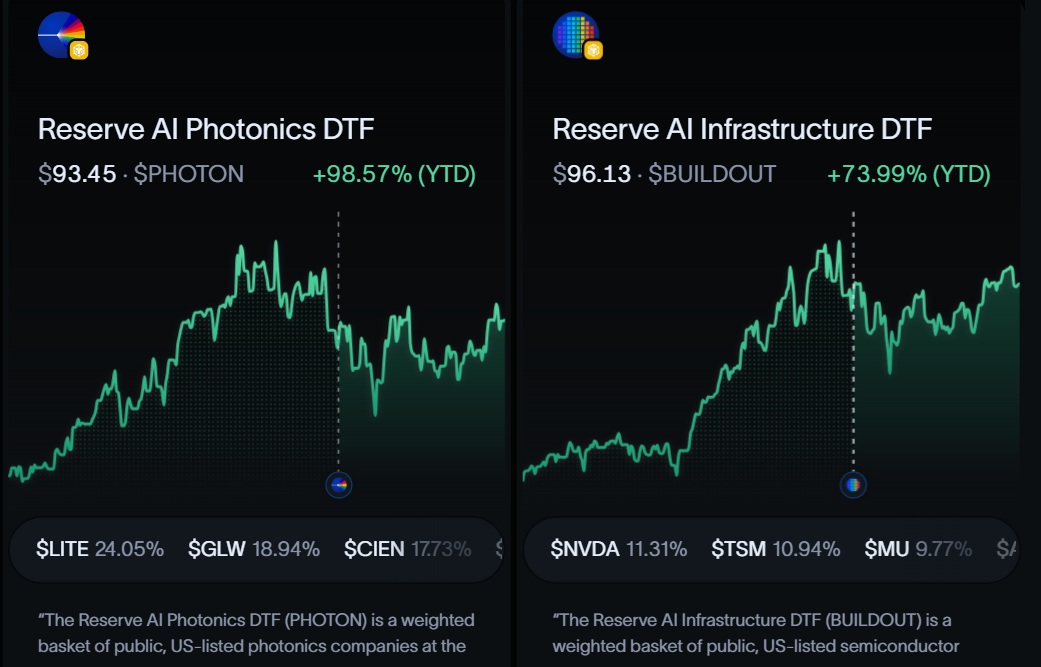
Then there is MAG7, an on-chain portfolio designed to give exposure to Apple, Amazon, Alphabet, Meta, Microsoft, Nvidia and Tesla in one token, with the basket rebalanced every two months.
Tokenized stock portfolios are where the idea starts getting genuinely interesting.
Buying an ETF through Vanguard is relatively easy, but blockchain versions can be minted, transferred, traded and eventually plugged into other on-chain financial products without needing a broker or waiting for the traditional fund infrastructure surrounding them.
And the direction of travel is increasingly respectable. SEC Chair Paul Atkins has spent 2026 pushing U.S. markets toward tokenization, including a September exemption permitting certain venues to trade tokenized versions of U.S. stocks under defined conditions. His stated goal is to bring American capital markets into the on-chain era.
Reserve has been building toward that world for years - the project dates to 2018 and counts Peter Thiel among its early backers, alongside Coinbase and Sam Altman.
So the question becomes whether people eventually prefer buying and managing portfolios on-chain rather than assembling them one asset at a time.
That is basically the insight Vanguard helped popularize in traditional finance: most people do not want to become professional stock pickers. They want sensible exposure to a market, sector or investment idea in one product. Reserve brings the tidy crypto version.
So What Does RSR Actually Do?
RSR sits underneath this ecosystem and captures a percentage of the fees created via minting and holding DTFs. This largely transpires through the accelerated buy-and-burnback mechanism, but also appears through staking (letting you guide DTFs and earn up to 30% APY).
That means RSR holders can vote-lock RSR to a particular Index DTF and vote on decisions such as which assets belong in the basket, their weightings, fees and rebalancing rules. A MAG7-style portfolio can have its methodology managed on-chain rather than by a conventional fund manager.
Index DTF activity can create demand for RSR itself - Reserve charges minting fees when new DTF tokens are created and ongoing fees based on assets held in the portfolios.
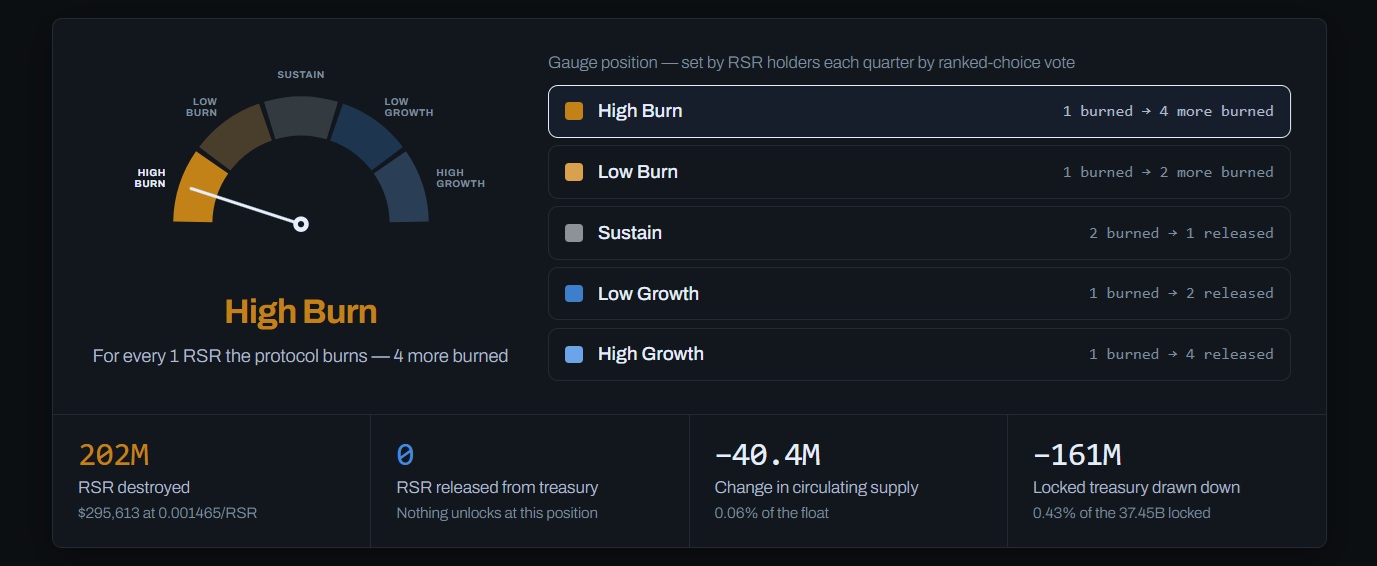
At the protocol level, part of those fees is used to buy RSR on the market and burn it, permanently removing the purchased tokens from circulation.
It creates a fairly clean feedback loop: More successful DTFs → more assets and minting activity → more protocol fees → more RSR bought and burned.
DTFs still need distribution, liquidity and users, and Reserve’s own community discussions have acknowledged that the economic flywheel is not yet fully proven. "If you build it, they will come" has not kicked off yet.
But RSR is increasingly a stake in whether on-chain portfolios become a serious category.
The Upbit listing may have put RSR on traders’ screens today. It certainly makes the token easier to buy directly in one of crypto’s most active retail markets.
The longer-term story is stranger and potentially much larger: one token for the Magnificent Seven, one for the AI buildout, one for the crypto market, and eventually thousands of portfolios assembled and managed entirely on-chain.
If someone is wondering whether RSR is the best crypto to buy after a 56% daily rally, chasing the candle is probably the least interesting idea.
The more subtle question is whether Reserve has created the same structural shift that made index investing enormous in traditional finance - only this time the funds themselves live on-chain.
Reserve News — Independent news about Reserve Protocol
Back to all articles