What Are DTFs? Decentralized Token Folios Explained
By Matthew
In 2025, Reserve launched “DTFs”, which are like ETFs, but on-chain. Effectively, a portfolio token that lets you create your own 24/7 fund from anything that can be represented on-chain.
Let’s explore what DTFs are and how they work.
What Are DTFs?
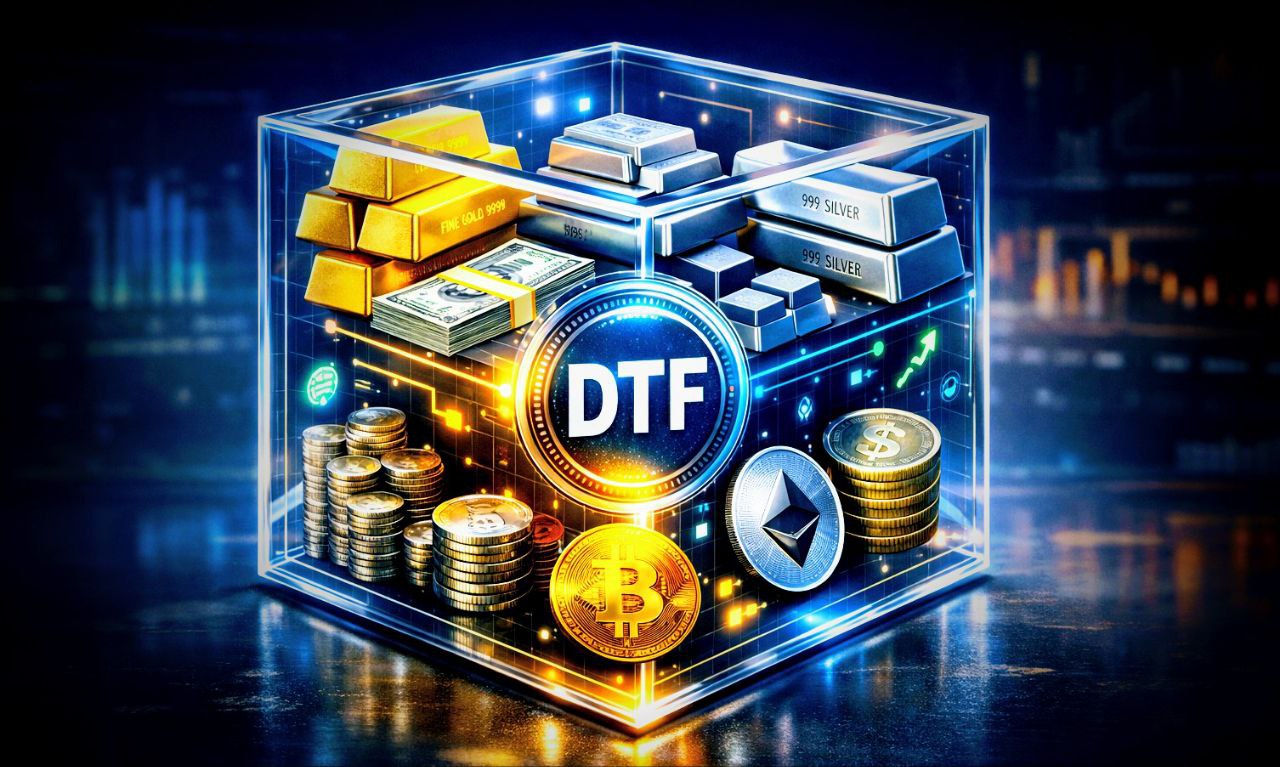
A Decentralized Token Folio (DTF) is an entirely on-chain, permissionless portfolio token which represents direct ownership of a diversified basket of crypto assets. Each DTF is backed by underlying tokens and fully redeemable for those assets.
A DTF is similar to an index fund in TradFi, but it is deployed through Reserve Protocol smart contracts and governed on-chain (generally, by RSR governors) rather than by an asset manager or custodian.
DTFs give holders exposure to multiple assets through a single token, rather than needing to manage individual positions. A DTF can be composed of anything that is represented on-chain through supported blockchains - making it ready for the tokenization of Real-World Assets.
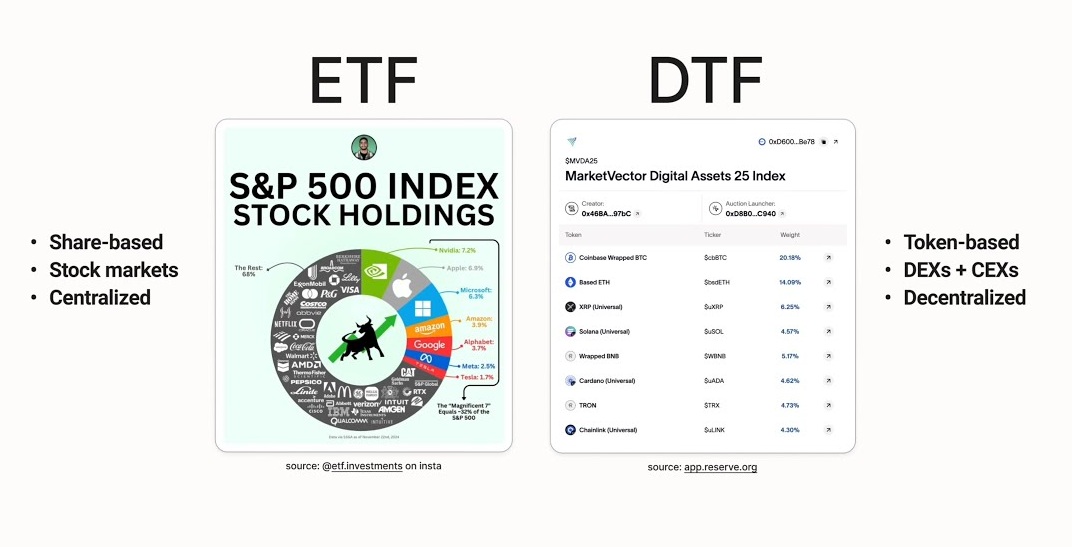
DTFs are often compared to exchange-traded funds (ETFs), though their structures do have some fundamental differences:
Traditional ETFs are issued by centralized institutions, trade during market hours, rely on custodians, and provide limited transparency into holdings.
DTFs are permissionless, trade 24/7, are self-custodied, and expose all holdings and rules transparently on-chain.
This distinction is fundamental, not superficial. But the analogy holds in layman’s terms.
Why DTFs Exist
The crypto market has become too large and complex for most participants to manage effectively. Thousands of liquid tokens exist across sectors such as Layer 1s, Layer 2s, DeFi, AI, gaming, and infrastructure.
Similarly, with “everything being tokenized”, there needs to be an ETF-approach for institutions, hedge funds, and even for the creation of asset-backed currencies that can preserve purchasing power over time (Reserve’s long-term aim).
If a future world currency is going to be asset-backed (versus fiat currencies which are historically prone to inflation), and that currency needs to contain multiple assets (e.g. gold, silver, USD, etc), then an approach like a DTF is needed.
For the record, it's not a new idea, economist Irving Fisher was talking about it as far back as the 1920s.
But writing for 2026, and through a Reserve lens, there are two short-term challenges to approach:
Asset selection risk: Choosing individual winners is difficult and time-consuming.
Portfolio maintenance risk: Keeping a diversified portfolio balanced requires constant rebalancing.
DTFs address both challenges by packaging diversified exposure into a single asset that can be held, traded, or, perhaps most interestingly, integrated into DeFi strategies.
Instead of focusing on a single project, users can gain exposure to an entire market segment or the broader crypto economy. You could hold an AI portfolio, or the top 20 crypto assets, or tokenized stock portfolios. A portfolio based on raw materials, precious metals, and a slice of Bitcoin and Ethereum is what this writer is waiting for.
How DTFs Work
Asset Backing
Each DTF is fully backed by its underlying assets. The smart contract holds the component tokens, and the circulating DTF supply reflects proportional ownership of the basket.
Holders can redeem their DTF tokens at any time to receive the underlying assets based on the portfolio’s current weights.
Minting and Redemption
DTFs can be minted and redeemed directly on-chain. Users provide the required assets to mint new DTF tokens (or use a “Zapper” process which fetches the assets on the minter’s behalf) or burn DTF tokens to redeem the underlying assets.
This mechanism helps keep the DTF’s market price aligned with the net asset value of its holdings.
Permissionless Creation
Anyone can create a DTF using Reserve’s infrastructure, with no approval process or centralized issuer. That’s not technically true, as right now the Reserve team helps incubate new projects (reach out to them on the Reserve website). Portfolio rules, weighting, and rebalance schedules can all be set up at the start or carried out on the Reserve’s Register platform.
Governance
Some DTFs are governed by token holders or predefined frameworks. Effectively any governance system can be used, although many deployers use the RSR token for simplicity. Governance can determine portfolio composition, rebalancing, or other parameters, depending on the DTF’s design.
Types of DTFs
Index DTFs
Index DTFs track a defined basket of assets without generating yield, and their primary purpose is to offer market exposure and diversification in one token.
DTFs are typically weighted by market capitalization, equal weight, or another transparent method, and are periodically rebalanced.
Yield DTFs
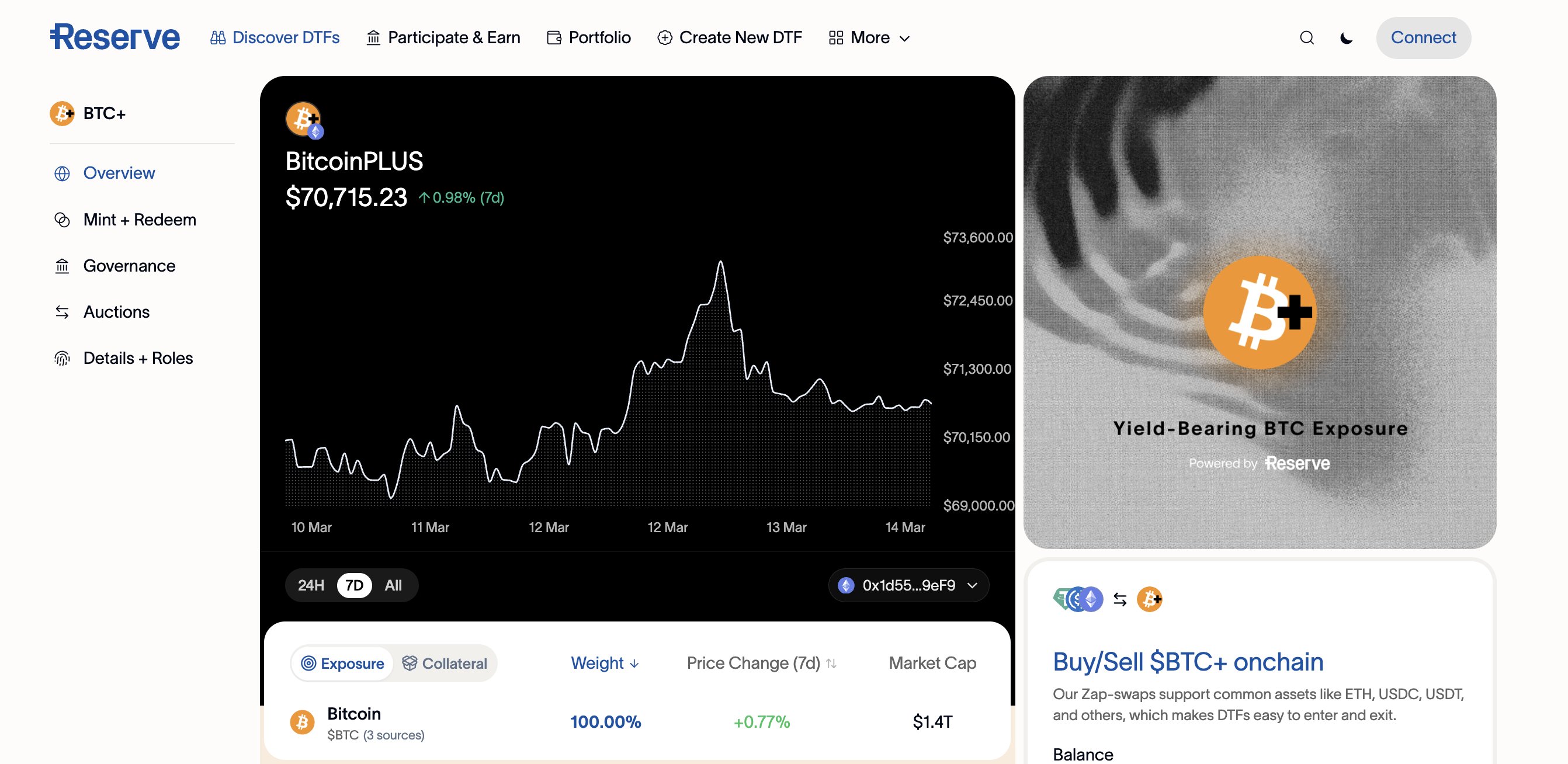
Yield DTFs hold assets that generate on-chain yield through staking, lending, or other DeFi mechanisms. These portfolios are structured to produce income rather than only track price performance.
Yield DTFs introduce additional considerations, including third-party smart contract risk and yield variability. But they are “protected” by RSR, which offers first-loss protection. Effectively, RSR holders stake on a Yield DTF and govern the basket, and if a Yield DTF “loses the peg”, their RSR can be seized to try to make DTF holders “whole”.
The asset-backed currency eUSD once went through this process, during the Silicon Valley Bank / USDC crash, and was successfully returned to $1 over a weekend.
Transparency and DeFi Composability
Because DTFs are fully on-chain, the following apply:
All holdings are visible in real time
All rules are enforced by code rather than intermediaries
DTF tokens can be used across DeFi protocols as collateral, liquidity, or strategy components
This composability is one of the most important advantages over traditional index products.
Exploring the First Major DTFs
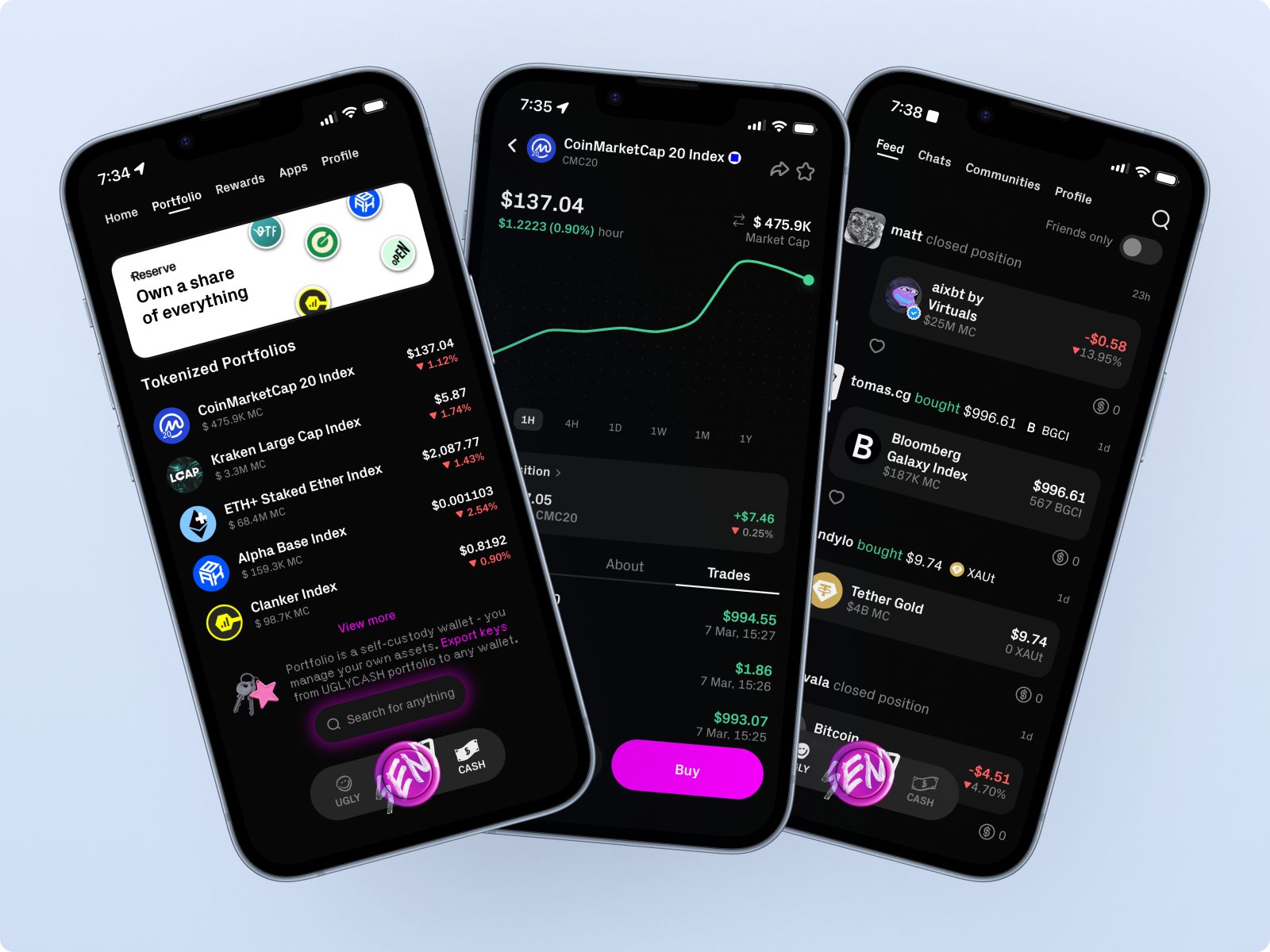
CMC20 Is the Broad Crypto Market Index
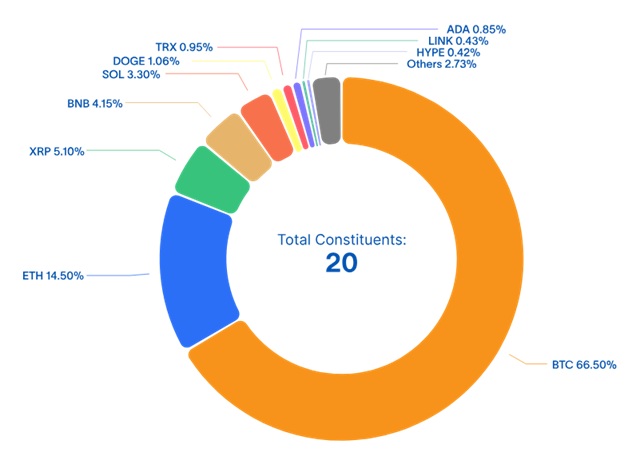
CMC20 is one of the most well-known DTFs built on Reserve Protocol.
It tracks the top 20 crypto assets by market capitalization using CoinMarketCap data, with the portfolio market-cap weighted and rebalanced regularly to reflect market changes. You can see CMC20 right at the top of the CoinMarketCap website.
CMC20 is often described as an on-chain equivalent to broad equity indices such as the S&P 500. It aims to represent the core of the crypto market rather than targeting a specific narrative.
Key Characteristics
Exposure to the largest and most liquid crypto assets
Market-cap-weighted composition
Transparent holdings and methodology
Redeemable and composable within DeFi
CMC20 is frequently used as a benchmark or core holding, especially by users seeking broad exposure without managing individual positions. And now it is in a coin.
LCAP Captures Institutional-Grade Large-Cap Exposure
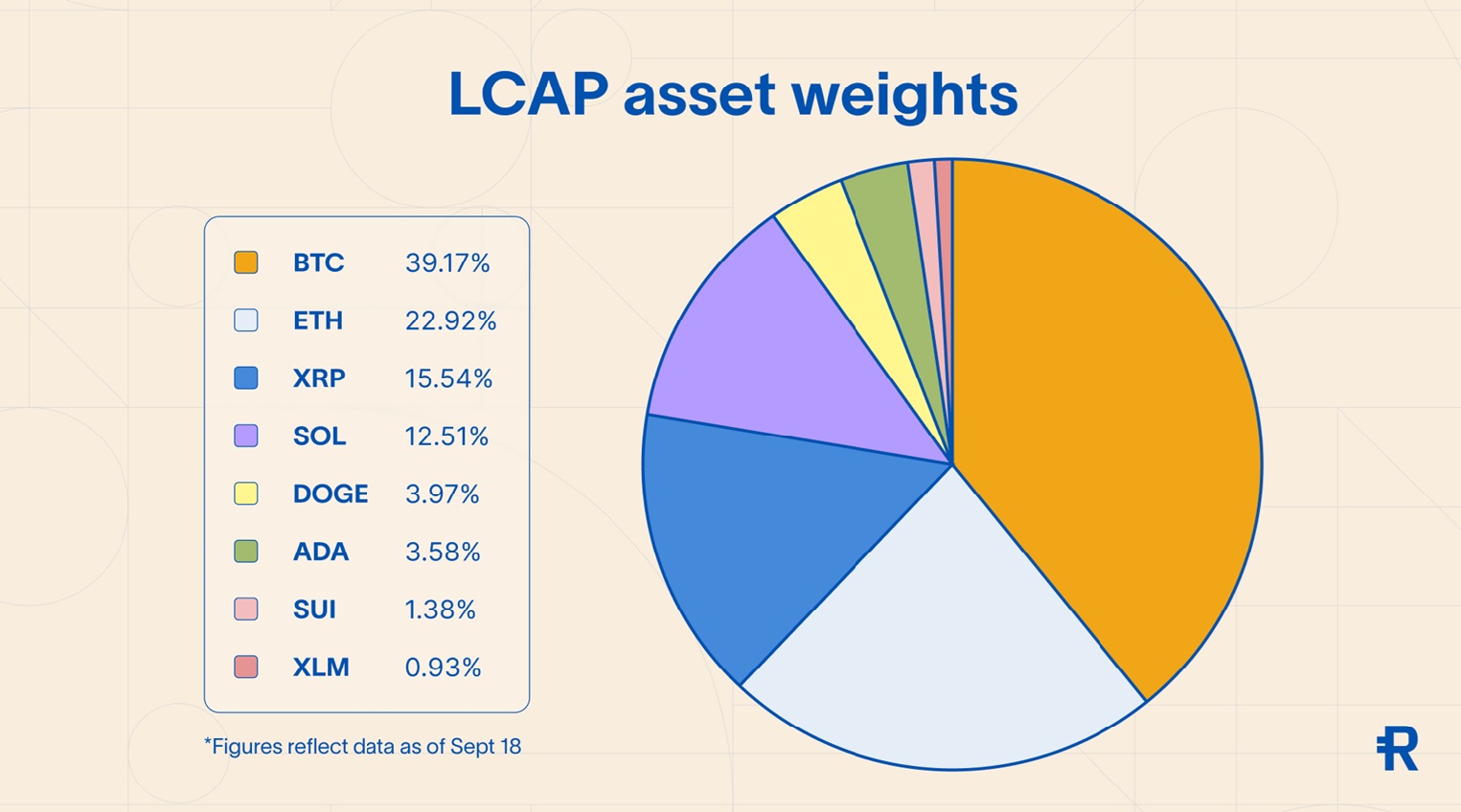
LCAP is a large-cap index DTF designed to meet institutional standards for benchmark construction and governance, and was built using index methodology from CF Benchmarks, a benchmark administrator whose indices are used in regulated financial products.
LCAP represents a curated basket of large-cap digital assets selected and weighted according to institutional benchmark standards, rather than solely on-chain metrics.
What Makes LCAP Different
Regulated benchmark methodology
Emphasis on transparency, market-fit, and governance
Designed for both on-chain and off-chain liquidity environments
Bridges traditional finance expectations with DeFi execution
LCAP is also supported by centralized liquidity venues, including Kraken, which helps extend its reach beyond purely decentralized markets.
Risks and Considerations
DTFs are not risk-free, and users should understand the following factors:
Smart contract risk remains present, even in audited systems.
Governance mechanisms can be attacked or manipulated if poorly designed.
Market risk is inherent, as DTFs reflect the price movements of their underlying assets.
Liquidity conditions can vary depending on the DTF and market environment.
Why DTFs Matter Long Term
DTFs represent a structural evolution in how crypto portfolios are constructed and accessed.
They enable diversified exposure without custodians.
They allow index-style investing without centralized issuers.
They integrate naturally with DeFi infrastructure.
They enable thematic, rules-based portfolios that can evolve transparently over time.
CMC20 demonstrates how broad market exposure can be packaged on-chain.
LCAP shows how institutional-grade benchmarks can be deployed without abandoning decentralization.
TLDR
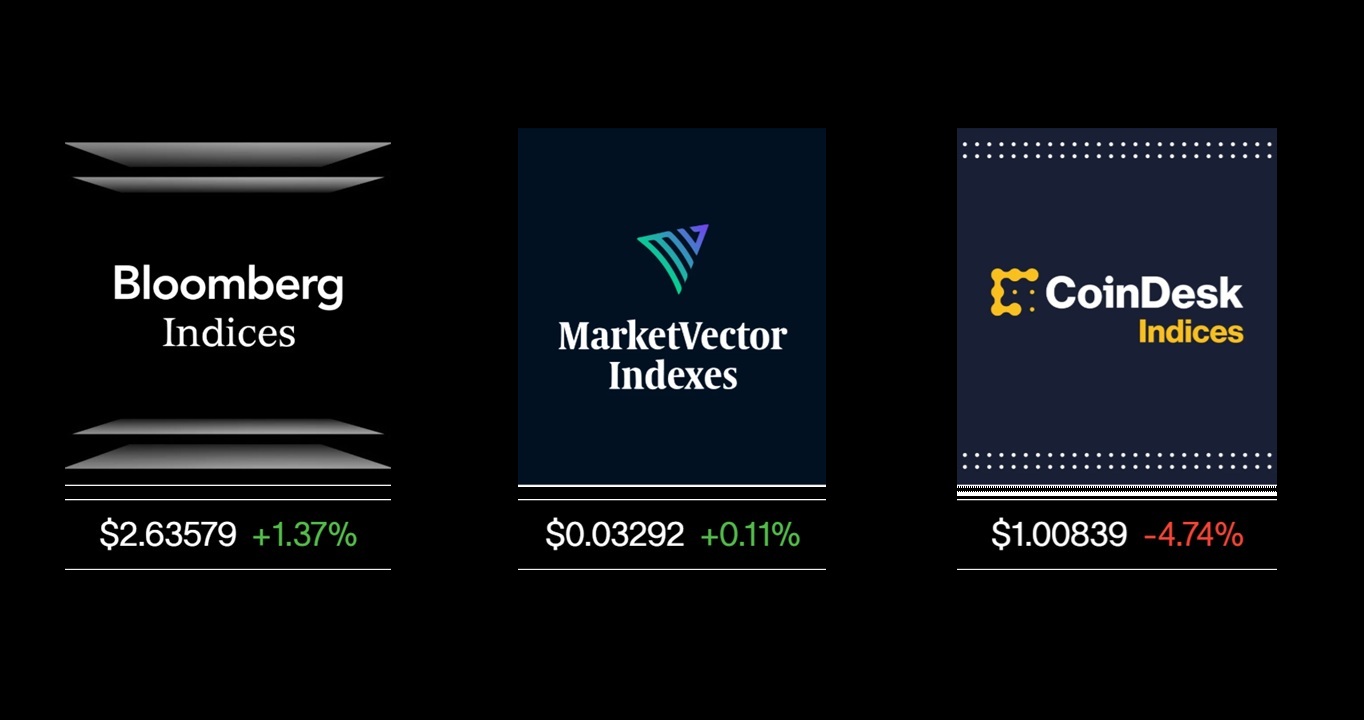
If you haven't spotted it yet, Reserve Protocol’s DTF framework is potentially a foundational layer for crypto portfolio construction.
You can learn more about Crypto ETFs here.
Reserve News — Unofficial news about Reserve Protocol
Back to all articles





 ble currencies) on Reserve.