
The Best Crypto ETFs: A Guide to Smart Investing in Cryptocurrency
By Matthew
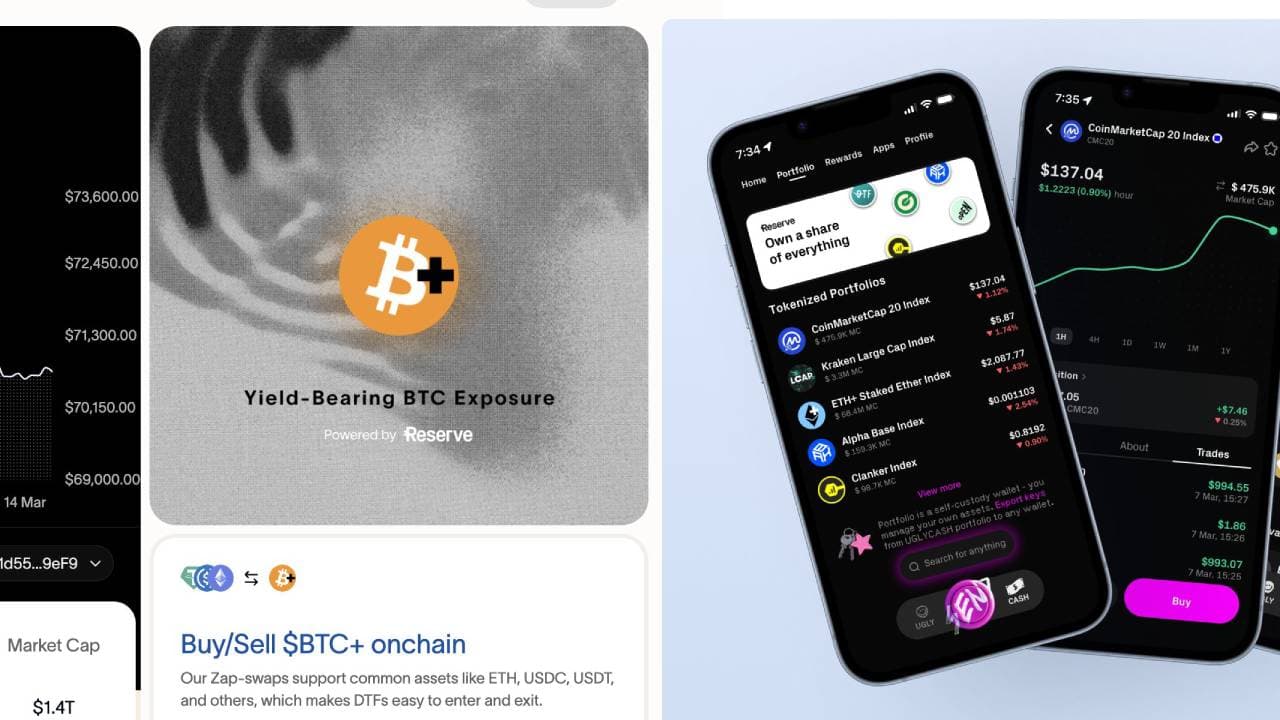
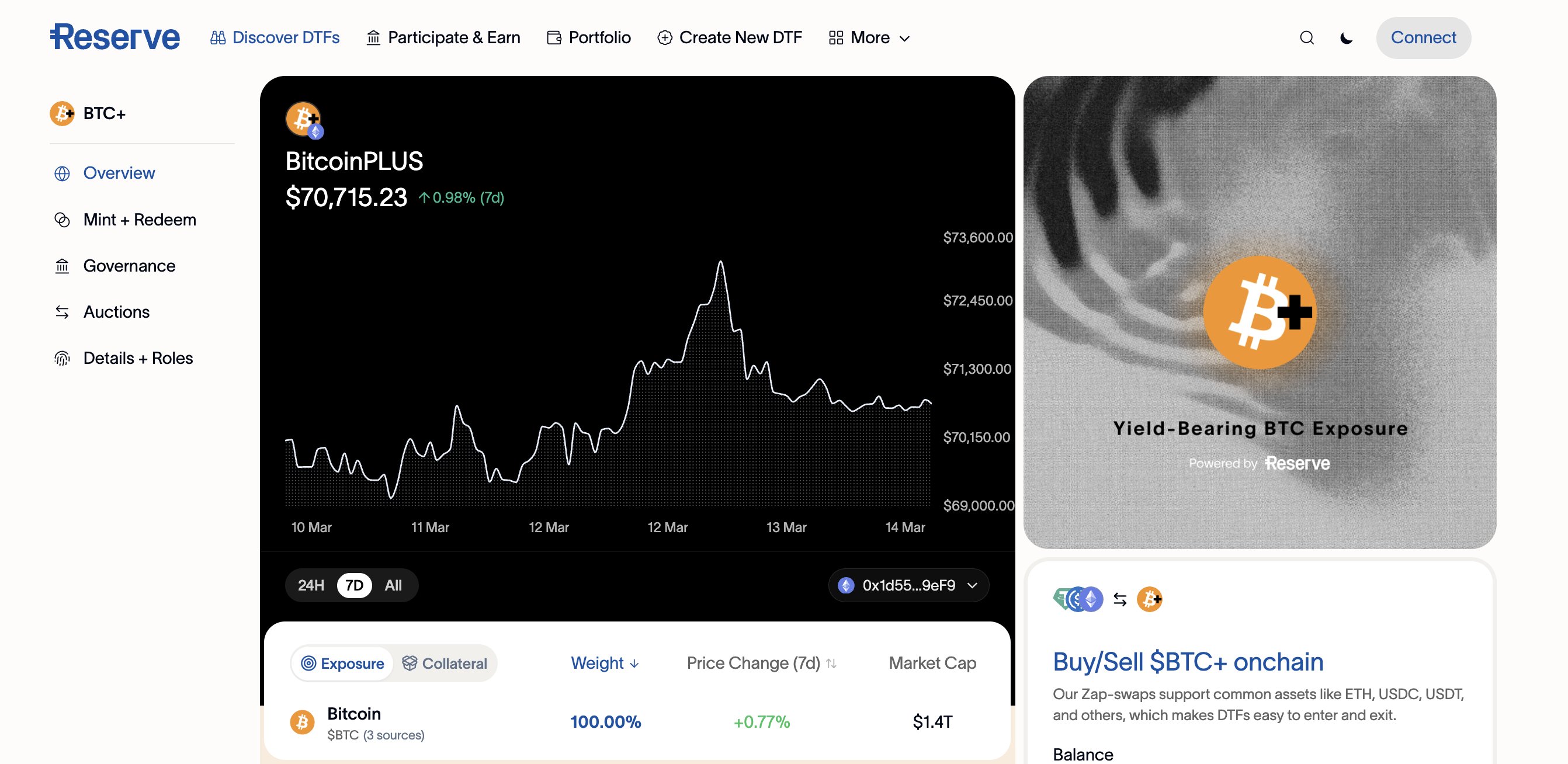
Crypto ETFs are Decentralized Token Folios (DTFs) built on the Reserve Protocol platform, providing on-chain indexes which represent direct ownership of a diversified basket of crypto assets.
As an example, you can create and share a portfolio which might be a mixture of Bitcoin and Ethereum, tokenized gold and silver, tokenized stocks, USDT, and perhaps a few other fiat currencies and altcoins.
All assets are wrapped into a single token that is mintable and redeemable at any time. Unlike some tracker projects, you have direct ownership of the assets within the portfolio.
If you create a crypto ETF, you can charge fees for managing the portfolio, and you can also encourage others to help make governance decisions on rebalancing.
You can explore crypto ETFs and learn how to create one on register.app. Popular crypto ETFs right now include CMC20 and LCAP.
Investing in Crypto ETFs
Choosing crypto ETFs depends on factors like management fees, expense ratio, and tracking errors.
Traditional ETFs launched in 1993 with the SPDR S&P 500 ETF Trust in 1993, and has grown into a 19 trillion dollar market as of early 2026. The allure was simple: low-cost, diversified exposure that could be traded intraday like stocks.
Crypto ETFs on Reserve push the concept further. They are available 24/7 and have no middle-men, resulting in extremely low fees. Anyone can launch one, or employ a fund manager, or buy an existing crypto ETF. Managed entirely on-chain, they are inspectable at any moment, and the ETF holder owns the assets held in the token. As the assets are wrapped in a single token, they can be bought, sold, or exchanged at any time, globally.
Any governance style can be employed - it can be an individual, a committee, or decisions voted on by decentralized stakeholders, who can receive a small percentage of the management fee in return.
What is the Best ETF for Crypto?
Crypto ETFs can also take on any flavor. The LCAP crypto ETF, launched by the Kraken crypto exchange, captures 95% of the crypto market. It is powered by CF Benchmarks, which is trusted with $80B+ in index assets, including BlackRock’s IBIT.
In effect, it is “uncomplicated exposure to the largest, most liquid crypto assets” and, via Reserve, allows for 24/7 permissionless minting, redeeming and trading, with real-time proof of reserves on-chain. As an ERC-20 asset, it is simple to hold and move.
CMC20, powered by CoinMarketCap, meanwhile, is a BNB token and first tradable index token native to that chain. It covers the top 20 crypto assets by weight (so, for instance, Bitcoin dominates the portfolio at 68%, at the time of writing, followed by Ethereum at 13% and then the rest of the top 20).
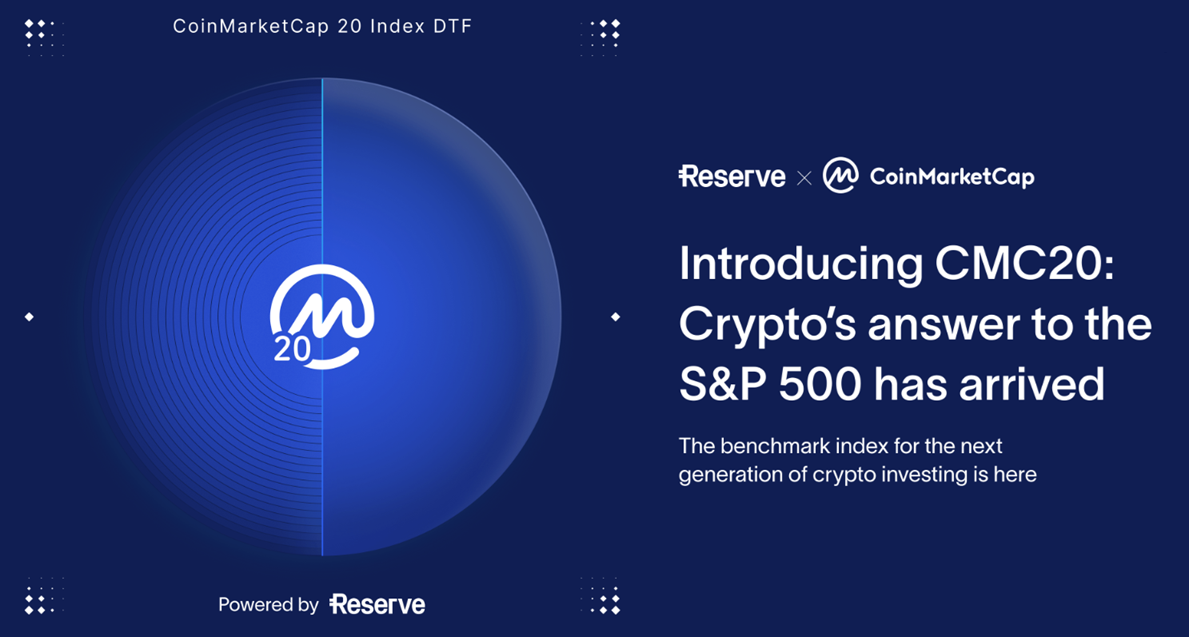
It is a crypto ETF geared at TradFi institutions, who want exposure to the crypto market but without needing to self-manage their portfolio.
The largest ETF in crypto is between LCAP and CMC20, which currently both sit at around $6 million in TVL. These are both new assets and expected to grow in the years ahead. However, new crypto ETFs are launched regularly on Reserve.
Alpha Base Index, for instance, tracks more speculative assets. The Bloomberg Galaxy Crypto Index tracks Bitcoin, Layer 1s, and a few other major crypto assets.
As real-world assets become increasingly tokenized, they can be added to any DTF at any time, and fund managers can work out their perfect portfolios, and earn daily management fees from clients and customers.
Reserve News — Unofficial news about Reserve Protocol
Back to all articles






 ble currencies) on Reserve.