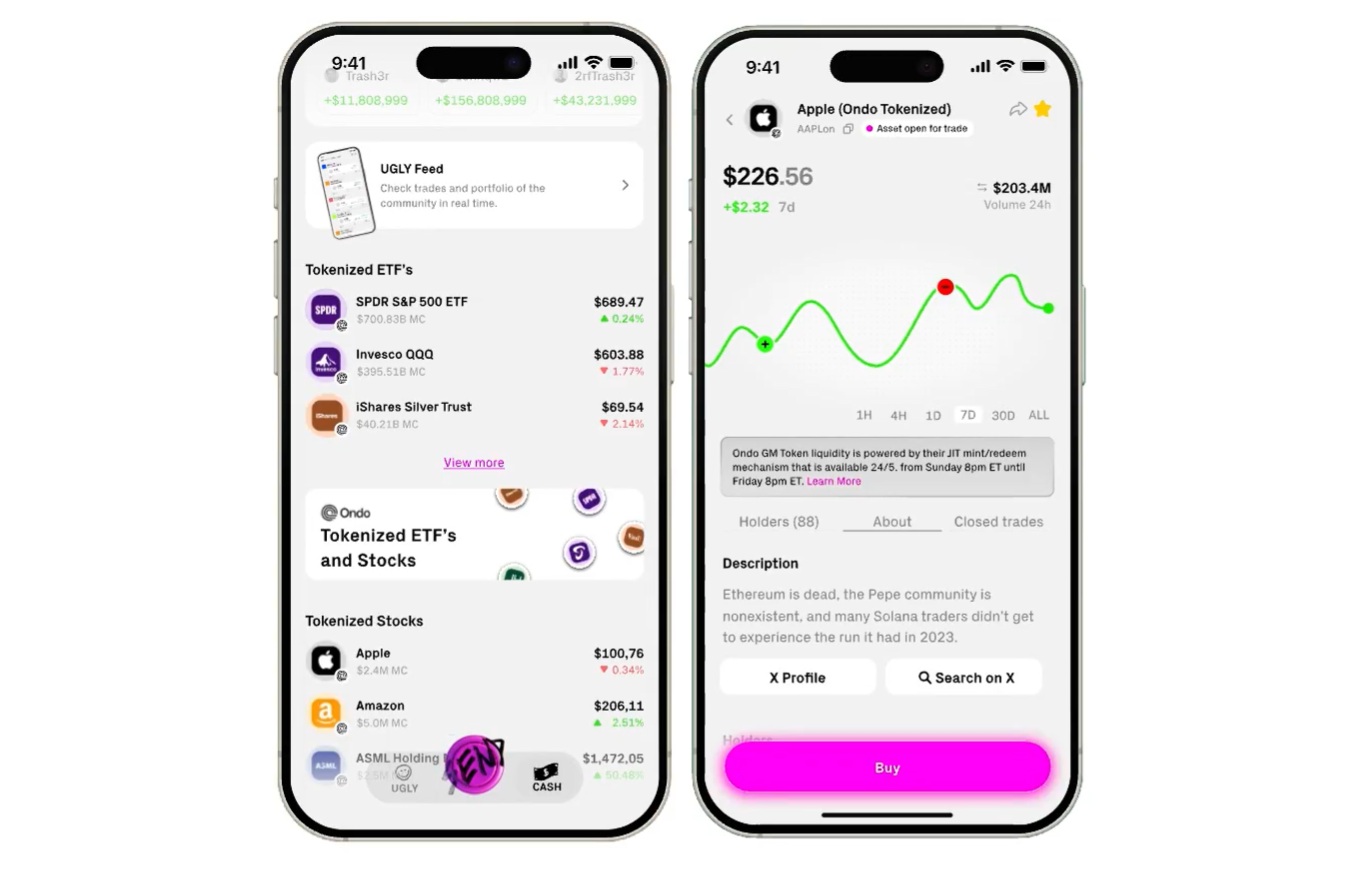
UGLYCASH Brings Tokenized U.S. Stocks On-Chain With Ondo Integration
By Matthew

Reserve News — Unofficial news about Reserve Protocol
Back to all articles

By Matthew

Reserve News — Unofficial news about Reserve Protocol
Back to all articles
Bridge activity around Reserve Protocol is accelerating, with cumulative RSR transfers to Base now approaching 5 billion tokens.
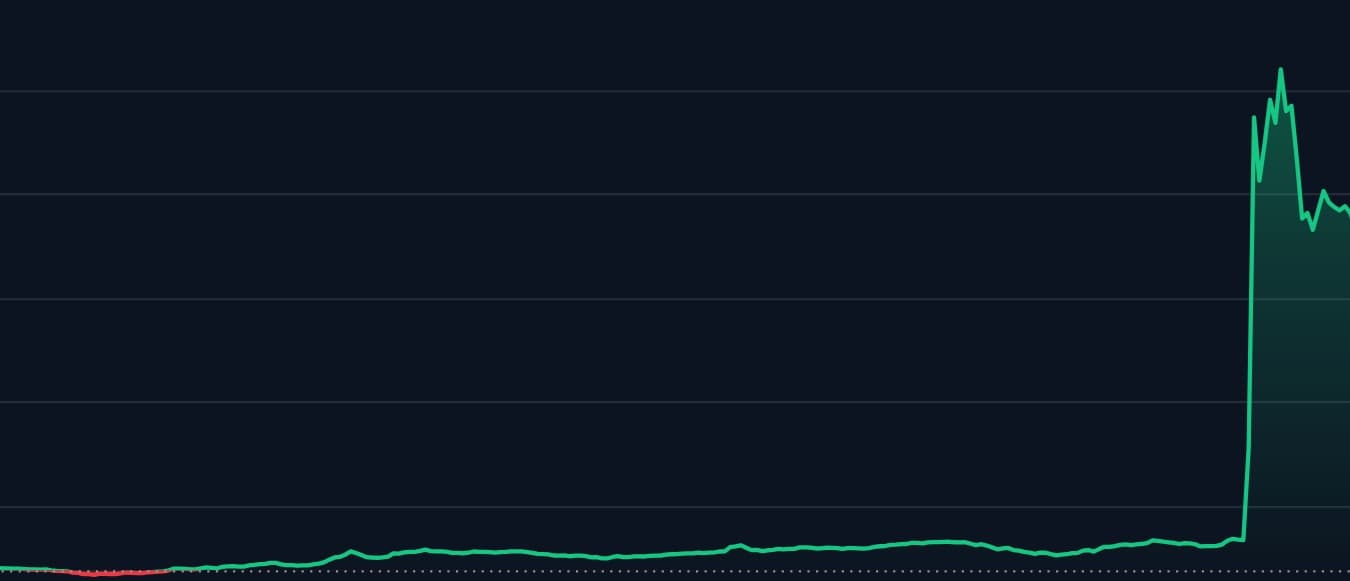
Bridge activity around Reserve Protocol is accelerating, with cumulative RSR transfers to Base now approaching 5 billion tokens, according to data from the Reserve dashboard on Dune Analytics.
The figure reflects the total volume of RSR that has moved across the bridge between Ethereum and Base since the integration launched, rather than the current supply held on the network (131 million RSR). Even so, it shows a clear trend following Reserve’s deployment on Base, relatively modest through 2023 and early 2024 before accelerating sharply during 2025 and into 2026, with figures from the last 10 days showing 4.936 billion RSR.

It follows the broader rise of Base as one of the fastest-growing Layer 2 ecosystems, with lower transaction fees and faster execution, making it an attractive place for DeFi protocols whose products require frequent on-chain operations. For Reserve, that includes minting, redeeming, and managing baskets of assets within its growing ecosystem of DTFs (Decentralized Token Folios, similar to index funds or on-chain ETFs).
Bridge flows also tend to spike when liquidity providers and market makers move inventory between chains. A single large transfer can move hundreds of millions of tokens, particularly when new pools or trading venues launch on a network.
While Base is becoming a major hub, it is unlikely to be the only destination for multi-chain Reserve activity. One of the protocol’s flagship index DTFs, CMC20, already operates on the BNB Chain. If adoption continues to expand across ecosystems, similar liquidity migrations could eventually follow there as well.

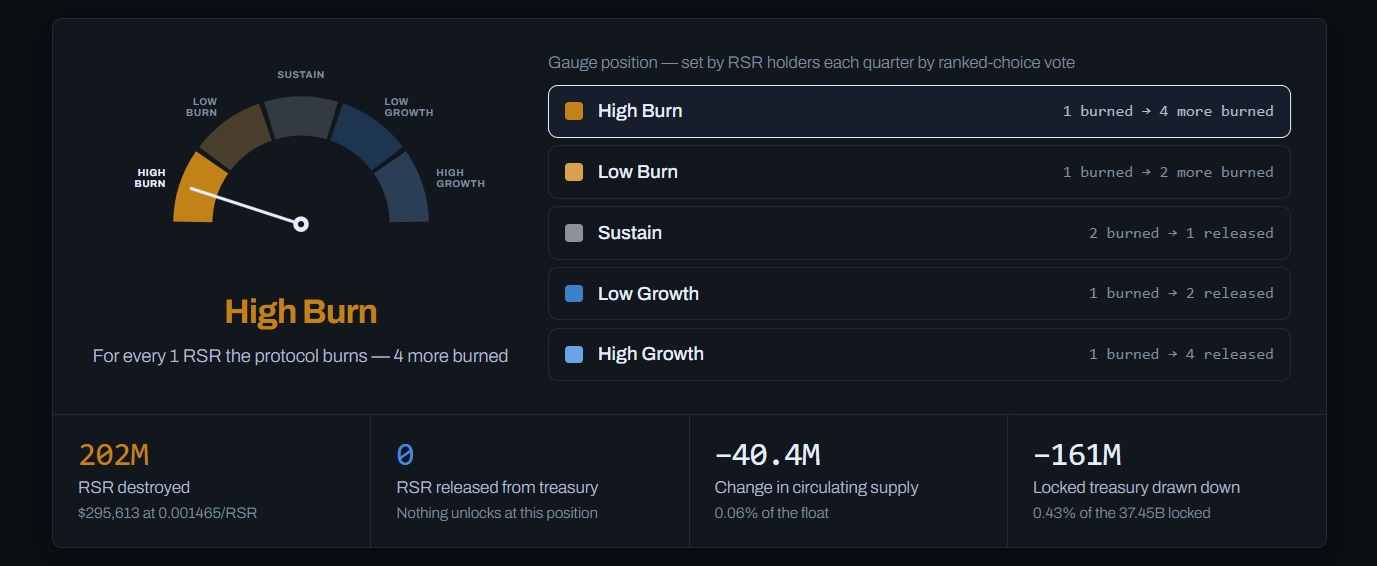
The Reserve Growth Simulator, now live at reservegrowth.app, is a fundamentals-based modeling tool that runs 10,000 simulated versions of the protocol.

By Matthew

Reserve News — Unofficial news about Reserve Protocol
Back to all articles
The Reserve Delegate Program trial run would offer selected community members $250 per month to actively participate in protocol governance.
Governance in crypto is often described as decentralized, but it frequently looks very different - you get a handful of large holders voting on proposals while most token holders remain silent.
It’s affected Reserve Protocol, too, so a new proposal is trying to change that with a modest but meaningful incentive.
The Reserve Delegate Program trial run would offer selected community members $250 per month to actively participate in protocol governance. The idea is that people who do the work of reading proposals, debating changes, and voting consistently should be supported.
The payment is not intended to create professional politicians within the DAO, but rather serves as a small stipend for active contributors, helping offset the time required to stay engaged with the growing number of decisions across Reserve’s ecosystem of DTFs.
The need for delegates has become clearer as Reserve’s governance layer expands.
The protocol allows users to create and manage DTFs (Decentralized Token Folios - tokenized index funds that can contain baskets of assets and evolve through governance decisions). The system is secured by the governance token RSR, which is used to vote on proposals affecting these products.
But participation has historically been thin on the ground, with many votes passed with only a handful of governors participating, a pattern that risks concentrating power in the hands of large token holders, including Reserve Protocol, Confusion Capital, and ABC Labs. Delegation is designed to solve that problem by allowing smaller holders to assign their voting power to trusted community representatives.
The new trial program would help formalize that system by supporting a small group of delegates tasked with staying engaged in governance discussions.
$250 per month is intentionally modest, and supporters argue that the goal is not to create a full-time role but to encourage consistent participation across Yield DTFs (Index DTFs may be included down the line).
Governance in DeFi often requires reading lengthy proposals, analyzing changes to collateral baskets or risk parameters, and participating in forum debates before voting. Without incentives, many token holders simply do not bother.
Under the proposed trial structure, delegates would receive a small monthly payment while being expected to:
actively monitor governance proposals
participate in discussions on the forum
vote consistently on behalf of delegated token holders
publish reasoning behind their votes
The proposal is also part of a larger effort to move Reserve governance away from centralized influence. A broader delegate network is intended to distribute voting power among engaged community members instead.
Delegating voting rights to trusted participants should create a more representative governance process - one where decisions reflect a wider range of stakeholders.
It is early days for the proposal, but it is being mooted as a practical step toward a stronger governance infrastructure. To weigh in with your thoughts, read the discussions in the Reserve Forum and offer your feedback.

ixEDEL feels like a new thing - actually, something old, something new. It reads more like a private wealth portfolio than a DeFi index.
When I first explored ixEDEL, it looked like another experimental basket inside Reserve Protocol. The ecosystem has begun to fill with DTFs (Decentralized Token Folios), which function a bit like on-chain ETFs. Some are thematic, some opportunistic. Many are straightforward bundles of crypto assets.
But ixEDEL feels like a new thing - actually, something old, something new. It reads more like a private wealth portfolio than a DeFi index.
The creator, Sagix, describes it as a store-of-value portfolio engineered for resilience. Instead of betting on one macro outcome, the basket spreads capital across several historical safe havens - gold, Bitcoin, and Swiss-franc exposure - while adding in yield-bearing stablecoins.
The approach feels closer to old-school wealth management than typical crypto design, with the goal of preserving purchasing power in uncertain conditions, with room for upside along the way.
ixEDEL is a DTF issued through the Reserve ecosystem. DTFs are programmable baskets that bundle multiple assets into a single token. Users mint or redeem the index token while governance manages the basket composition.
In practice, ixEDEL functions like a macro portfolio where, instead of choosing between gold, Bitcoin, or stablecoins, the index holds all of them at once. It is an outcome of the work Sagix Apothecary, who has spent years deep-diving the mechanisms that have created wealth destroyed fortunes in 1637, 1837, 1907, and 1994, and other times across nations and history.
The current composition of ixEDEL illustrates the philosophy:
Asset | Weight | Role |
ZCHF | ~24% | Swiss-franc stable exposure |
Tether Gold | ~21% | Tokenized gold |
sUSDS | ~20% | Yield-bearing stablecoin |
steakUSDC | ~16% | Yield on USDC |
Bitcoin | ~13% | Digital hard asset |
syrupUSDC | ~5% | Lending yield exposure |
The design becomes clearer when the assets are grouped by the economic environments in which they tend to perform in.
Scenario | Assets that historically perform well |
Inflation | Gold, Bitcoin |
Deflation or slow growth | Stablecoins |
Expansion cycles | Bitcoin |
Crisis conditions | Swiss franc |
Rather than predicting which environment will dominate, ixEDEL spreads exposure across all of them.
This structure echoes the “all-weather” logic popular in macro investing, where a portfolio can survive different economic regimes rather than trying to forecast them.
One of the most unusual elements of the portfolio is its Swiss-franc exposure via Frankencoin (ZCHF).
In traditional finance, the Swiss franc has long been treated as a defensive currency. Switzerland’s political neutrality, conservative banking system, and historical monetary discipline helped establish that reputation. Investors frequently turn to CHF during periods of global instability.
Crypto portfolios rarely reflect this dynamic. Most stablecoin exposure is denominated in dollars.
By adding Swiss-franc exposure alongside dollar-based stablecoins, ixEDEL quietly diversifies its monetary base.
The other side of the basket is tokenized gold through Tether Gold, paired with Bitcoin. Gold tends to perform well during periods of inflation or currency instability, whereas Bitcoin (while more volatile) offers asymmetric upside when crypto is performing.
The two assets don’t behave identically. Their combination creates a broader hedge across different monetary scenarios.
Another unusual aspect of ixEDEL is that much of the “stable” side of the portfolio generates yield.
Several assets in the basket, including sUSDS, steakUSDC, and syrupUSDC, are designed to produce returns through lending or savings mechanisms.
That makes the portfolio more than defensive but a way to compound capital gradually while maintaining conservative exposure. It gives a quiet engine to the index.
Once the portfolio is viewed through a risk lens, another pattern appears.
The basket resembles a barbell strategy, a concept often associated with risk analyst Nassim Nicholas Taleb.
Barbell portfolios allocate most capital to extremely safe assets while keeping a smaller allocation to high-volatility assets with asymmetric upside.
The middle ground, moderate-risk assets, is avoided.
In ixEDEL’s case, the structure looks like this.
Portfolio Segment | Assets |
Conservative core | ZCHF, gold, yield stables |
Asymmetric exposure | Bitcoin |
Most of the portfolio focuses on stability and income, but a smaller allocation to Bitcoin introduces growth potential. If Bitcoin performs well, even a modest allocation can push the entire index higher. But if crypto markets weaken, the majority of the basket remains anchored in relatively stable assets.
Like other DTFs in the ecosystem, ixEDEL is governed through RSR (Reserve Protocol). RSR holders can vote-lock their tokens to participate in governance, propose changes to the basket, and earn a share of the DTF’s fee revenue.
Governance parameters include voting delays, proposal thresholds, and execution timelocks. These mechanisms allow the basket composition to evolve as markets change while keeping the decision process transparent and on-chain. Management fees are distributed and governors may earn revenue from the basket.
The structure effectively turns the portfolio into a decentralized asset management product.
Many crypto indexes focus on narratives: AI tokens, gaming tokens, or sector-based baskets.
ixEDEL instead reads like something that could exist in a conservative wealth office: a blend of gold, currency diversification, income assets, and a small allocation to high-growth exposure.
And, broadly speaking, the Swiss franc and the U.S. dollar are not strongly correlated over long periods - they often behave differently during periods of financial stress (with the Swiss franc is widely treated as a safe-haven currency), making ixEDEL a multi-currency reserve portfolio.
That design aligns closely with the broader ideas behind Reserve, which originally emerged from concerns about currency instability and inflation in parts of the world where local currencies lose purchasing power.
Although ixEDEL was deployed independently from Reserve, a portfolio built around diversified stores of value fits naturally within that framework.
What makes ixEDEL interesting to me is the design logic behind the basket.
DTFs allow anyone to assemble and publish a portfolio on-chain. In theory, this creates a new kind of financial ecosystem, one where independent portfolio designers compete to build the most resilient baskets.
Instead of trading tokens individually, investors can then allocate capital to portfolio strategies.
If that model matures, the Reserve ecosystem becomes more like an on-chain asset management platform. Individual DTF creators can act like digital fund managers, publishing strategies that others can mint.
ixEDEL is an excellent example, blending Swiss-style monetary conservatism, gold’s historical stability, Bitcoin’s potential for upside, and yield from modern DeFi infrastructure. In short, it spreads exposure across assets that have historically survived different economic conditions.
For a project built inside a young DeFi ecosystem, the portfolio design reads almost institutional in design - more like a traditional wealth portfolio translated on-chain. That may be precisely the point.

Bridge activity around Reserve Protocol is accelerating, with cumulative RSR transfers to Base now approaching 5 billion tokens.
Bridge activity around Reserve Protocol is accelerating, with cumulative RSR transfers to Base now approaching 5 billion tokens, according to data from the Reserve dashboard on Dune Analytics.
The figure reflects the total volume of RSR that has moved across the bridge between Ethereum and Base since the integration launched, rather than the current supply held on the network (131 million RSR). Even so, it shows a clear trend following Reserve’s deployment on Base, relatively modest through 2023 and early 2024 before accelerating sharply during 2025 and into 2026, with figures from the last 10 days showing 4.936 billion RSR.

It follows the broader rise of Base as one of the fastest-growing Layer 2 ecosystems, with lower transaction fees and faster execution, making it an attractive place for DeFi protocols whose products require frequent on-chain operations. For Reserve, that includes minting, redeeming, and managing baskets of assets within its growing ecosystem of DTFs (Decentralized Token Folios, similar to index funds or on-chain ETFs).
Bridge flows also tend to spike when liquidity providers and market makers move inventory between chains. A single large transfer can move hundreds of millions of tokens, particularly when new pools or trading venues launch on a network.
While Base is becoming a major hub, it is unlikely to be the only destination for multi-chain Reserve activity. One of the protocol’s flagship index DTFs, CMC20, already operates on the BNB Chain. If adoption continues to expand across ecosystems, similar liquidity migrations could eventually follow there as well.

Instead of an ETF issued by a fund manager, protocols are experimenting with tokenized index portfolios that anyone can mint, redeem, or hold directly.
Index funds quietly changed traditional finance back in the 1990s, when a single product tracking the S&P 500 allowed investors to buy exposure to hundreds of companies in one trade.
It removed stock picking, reduced fees, and became the default way that millions of people invest.
Crypto is starting to build the same idea on-chain.
Instead of an ETF issued by a fund manager, protocols are experimenting with tokenized index portfolios that anyone can mint, redeem, or hold directly in their wallet. On the Reserve Protocol, these portfolios are called DTFs (Decentralized Token Folios).
A DTF is a token backed by a basket of assets. Hold the token, and you automatically hold a proportional share of everything inside it. Minting and redemption happen on-chain, meaning the portfolio composition is transparent, and the assets remain verifiable at all times.
For users, the appeal should be obvious: Crypto markets have thousands of tokens, and choosing winners is difficult even for experienced traders. Index products offer a different approach: own the market instead of guessing which project will outperform. Own a slice of the market if you are interested in, for example, AI or DePIN or RWAs.
Traditional finance proved how powerful this model can be, and index funds now control trillions of dollars -passive investing has overtaken active fund management in many markets. Crypto, by contrast, has historically focused on single-asset speculation.
Several protocols are experimenting with index-style products, and Reserve’s DTF framework takes the concept further by allowing permissionless creation of token portfolios.
Instead of relying on a centralized issuer, anyone can design and deploy an index strategy using the protocol’s infrastructure. The portfolio rules, asset weights, collateral structure, and governance parameters are all encoded in smart contracts.
One example is CMC20, a DTF designed to track a diversified basket of major crypto assets. Rather than buying individual tokens separately, users can mint a single asset representing the entire portfolio, and the result is closer to a crypto-native ETF.

But there are important differences. Unlike traditional ETFs, DTFs are fully on-chain. Assets remain visible in real time, and the portfolio can interact with DeFi protocols, lending markets, or other smart contracts. That composability allows entirely new kinds of investment products.
Because DTFs are governed by token holders and RSR stakers, the portfolios can evolve over time, meaning weights can be adjusted, assets added or removed. Risk parameters can also be updated through governance proposals. So the model is closer to a community-managed index fund than that of a traditional asset manager.
Governance is secured by the protocol’s native token, RSR, which acts as a backstop (for Yield DTFs) and as a coordination mechanism across the ecosystem.
If index funds changed equity markets by simplifying access to diversified exposure, the same logic can change how people invest in crypto.
Instead of hunting through thousands of tokens individually, users could hold a handful of portfolio tokens representing entire sectors of the market: large-cap crypto, AI infrastructure, decentralized finance, or tokenized real-world assets... The sky is the limit.
But crypto is starting to rediscover one of finance’s oldest lessons: Sometimes the best investment strategy is simply owning the index.

A new governance proposal aims to clean up unused products on the Reserve Protocol by formally deprecating a group of dormant DTFs.
In a Request for Comment (RFC) posted on the Reserve governance forum, contributor starl3xx outlined a plan from ABC Labs to wind down 17 Yield and Index DTFs that have seen little or no activity since launch.
The proposal argues that leaving abandoned products visible in the Reserve app creates confusion for users and adds unnecessary monitoring overhead for the protocol’s core team.
“These products launched, attracted little or no sustained usage, and their deployers are no longer actively managing them,” the RFC explains.
The proposal targets nine Yield DTFs and eight Index DTFs that appear to have no ongoing governance participation or community oversight.
Yield DTFs proposed for deprecation:
dgnETH
hyUSD (mainnet)
hyUSD (Base)
MAAT
KNOX
USDC+
BSDX
VAYA
rgUSD
Index DTFs proposed for deprecation:
mvRWA
mvDEFI
AI
VTF
CLUB
MVDA25
SBR
ZINDEX
If approved, the proposal would disable new issuance by calling the protocol’s deprecateFolio function and remove administrative roles associated with each product. The DTFs would remain redeemable but clearly labeled as deprecated in the Reserve interface.
Importantly, the proposal does not lock funds or force exits.
Holders of any affected DTF can continue redeeming their tokens at any time for their proportional share of underlying assets. Redemption functionality remains live throughout the process.
The change primarily affects issuance and governance roles, not the redemption mechanism.
The Reserve platform intentionally allows permissionless experimentation - anyone can launch a DTF, but not every product gains traction.
Over time this creates what the proposal describes as a “long tail of products” that quietly go inactive.
ABC Labs says maintaining monitoring infrastructure for abandoned DTFs, including governance alerts through security tools like Hypernative, consumes resources that could be focused on active products.
The proposal identifies three main issues with leaving dormant DTFs live:
User confusion: inactive products appear alongside actively managed ones in the app.
Security surface area: smart contracts with governance roles but no active oversight increase operational risk.
Operational overhead: monitoring unused products wastes time and infrastructure.
Deprecating them would reduce that footprint while keeping the system safe for remaining holders.
The RFC is not final yet.
Reserve governance is structured so that RFCs act as a discussion phase before any formal on-chain vote.
If any of the listed DTFs still have active communities or maintainers willing to take over stewardship, the proposal invites them to come forward before it progresses to a formal governance proposal.
Otherwise, the protocol will move toward formally winding down the products rather than leaving them in indefinite limbo.
For Reserve, the move is a broader maturation of the DTF ecosystem where early experimentation gives way to focus on the products that have actually found users.

Crypto researcher Ignas DeFi has published a new deep-dive attempting to answer: which crypto tokens are actually investible?
Out of more than 17,000 tokens tracked by CoinGecko, Ignas narrowed the field to 132 tokens across 12 categories he believes have the fundamentals, narratives, or revenue models capable of surviving future market cycles.
Among the projects highlighted in the Real World Assets (RWA) category is RSR, the governance and backstop token behind the Reserve Protocol ecosystem.
Ignas is best known for his DeFi Research newsletter, where he analyzes token economics, protocol revenue, and market narratives for the next phase of crypto. Rather than relying on hype or price momentum, his methodology focuses on three core signals:
Revenue flowing to token holders
Protocols generating meaningful revenue
Narratives strong enough to survive bear markets
To compile the dataset, Ignas pulled market and revenue data from sources including DefiLlama, CoinMarketCap, and social-mindshare trackers such as LunarCrush.
He also used the AI coding assistant Claude to help aggregate and structure the dataset, although he noted the process required extensive manual debugging.
The result is a curated map of what he calls "the investible crypto market."
In Ignas' view, that universe is surprisingly small. Across the 132 tokens in the dataset, only 45 generate meaningful revenue for token holders, producing roughly $153 million per month, or about $1.8 billion annually, in holder-directed revenue through buybacks, burns, or fee sharing.
The remaining tokens are categorized by structural role in the crypto economy: Layer 1 chains, exchanges, infrastructure, AI compute networks, and real-world asset tokenization platforms.
The RWA category, where RSR appears, contains seven tokens representing roughly $13.5 billion in combined market capitalization. The coins are:
Chainlink (LINK)
Centrifuge (CFG)
Ondo Finance (ONDO)
Reserve Rights (RSR)
Polymesh (POLYX)
Clearpool (CPOOL)
Goldfinch (GFI)
While the category is still relatively small compared with base-layer networks, Ignas believes the sector's growth is only beginning.
"I expect the real RWA bull run is yet to come," he wrote.
Including RSR reflects Reserve's place within stablecoin infrastructure, tokenized assets, and indexing markets.
The protocol allows users to create DTFs (Decentralized Token Folios), which are baskets of collateral assets that can include stablecoins, yield-bearing tokens, and real-world assets. RSR acts as the system's governance token and over-collateralization backstop for certain DTFs.

This places Reserve in the "stablecoin infrastructure" layer supporting tokenized finance, which Ignas highlights as a foundational part of RWA.
Stablecoin infrastructure tokens currently represent just a handful projects with a combined market cap of about $1.07 billion, making them one of the smaller but potentially strategic segments in his framework.
Ignas' broader suggestion is that crypto markets are increasingly moving toward tokens behaving more like equity-like assets, where revenue, buybacks, and token-holder cash flows matter more than pure speculation.
"If crypto keeps moving toward 'tokens as equity,' price-to-sales ratios should matter more going forward," he wrote.
If he is right, this favors protocols with clear business models and sustained demand, especially those tied to infrastructure categories such as exchanges, tokenized assets, or stablecoins.
For Reserve, the future is straightforward: if RWA tokenization continues expanding and stablecoin infrastructure becomes more valuable, tokens connected to those systems may benefit from that growth.
Ignas himself cautions that the list should not be taken as a definitive ranking or investment recommendation. Many tokens were included simply because they have demonstrated resilience across multiple market cycles or occupy structurally important roles in the ecosystem.
But the exercise provides a structured way to think about fundamentals.
Instead of asking which token might pump next, the analysis asks which protocols are still likely to matter five years from now.
In that framework, Reserve, and its RSR token, is one of the projects worth keeping on the watchlist.
The Ignas Defi newsletter is one of the most well-regarded newsletters in crypto, and more than 150,000 people follow @DefiIgnas on Twitter.

The Reserve Growth Simulator, now live at reservegrowth.app, is a fundamentals-based modeling tool that runs 10,000 simulated versions of the protocol.

A new governance proposal will redirect a slice of eUSD’s fintech revenue to the people staking RSR behind the stablecoin.